Last updated: September 2026
Quick Answer
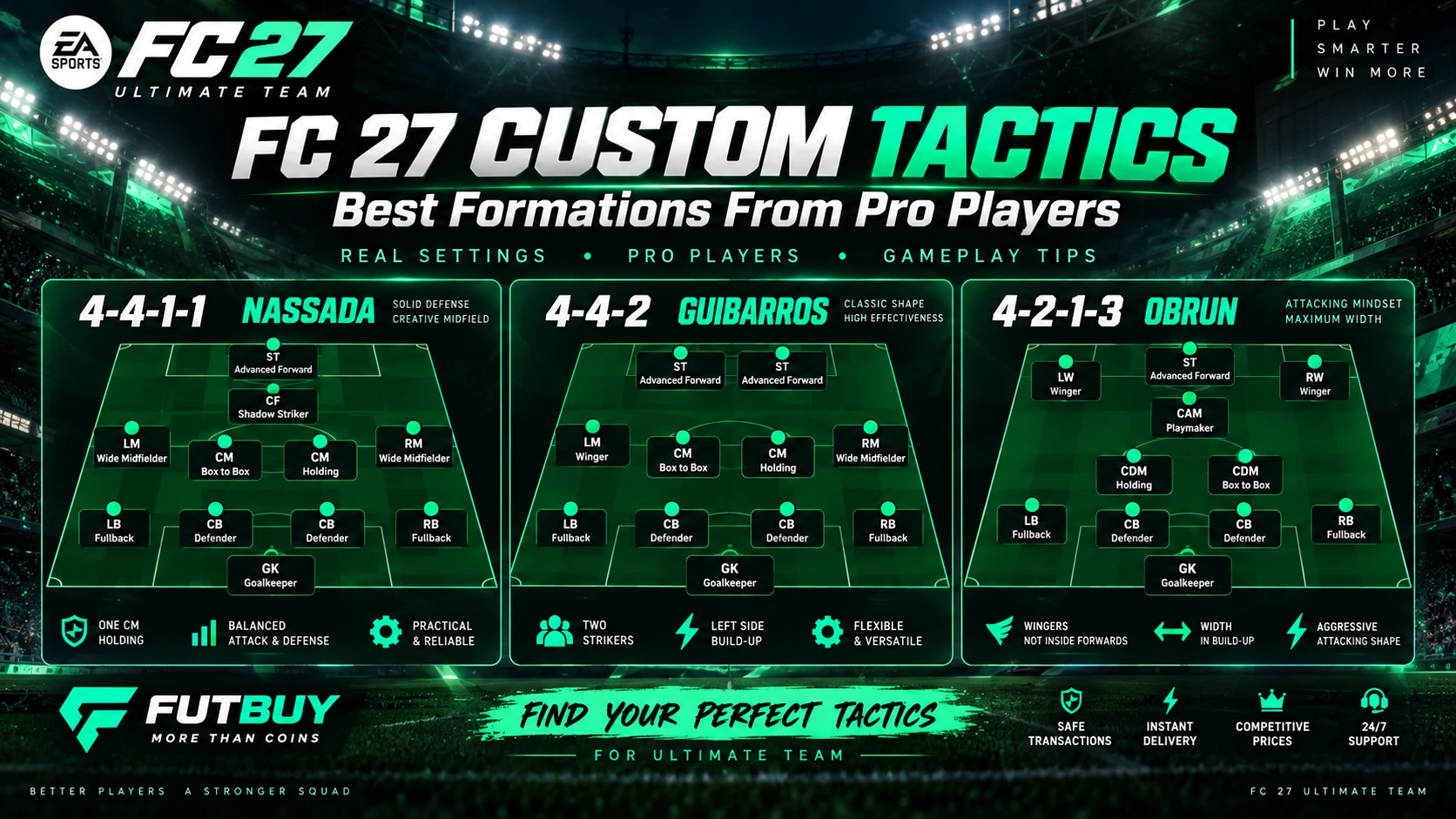
After almost five days since the release of FC 27, several formations have already started to stand out. The meta is still developing, but some custom tactics from strong players and pro-level users already look very interesting.
In this article, we will look at three formations:
• 4-4-1-1 by Nassada
• 4-4-2 by GuiBarros
• 4-2-1-3 by Obrun
Each of these setups has a different idea behind it. Some are focused on balance and control, while others give more attacking width and freedom.
The most important thing to remember is that FC 27 is still being tested by the community. Custom tactics can change quickly, and what works today may be adjusted in a week.
Why Custom Tactics Matter in FC 27
FC 27 feels like a game where formations and player roles matter a lot.
It is not only about choosing a popular formation. It is also about how your players move without the ball, how they react after losing possession, and how much support you have in midfield during build-up play.
This is why custom tactics are so important right now.
As we noted in our FC 27 first gameplay impressions, manual defending and small positional decisions matter much more this year. That makes your formation even more important, because the right structure can give you better passing options while making it easier to control space after losing possession.
A good tactic can help you:
• control the midfield;
• protect yourself from counterattacks;
• create better passing options;
• use wide players more effectively;
• build attacks with more structure.
At the same time, there is no perfect formation for everyone. A tactic that works for a pro player may not automatically work for you. The best approach is to use these setups as a base and then adjust them to your own playstyle.
4-4-1-1 by Nassada
Why 4-4-1-1 Is Popular
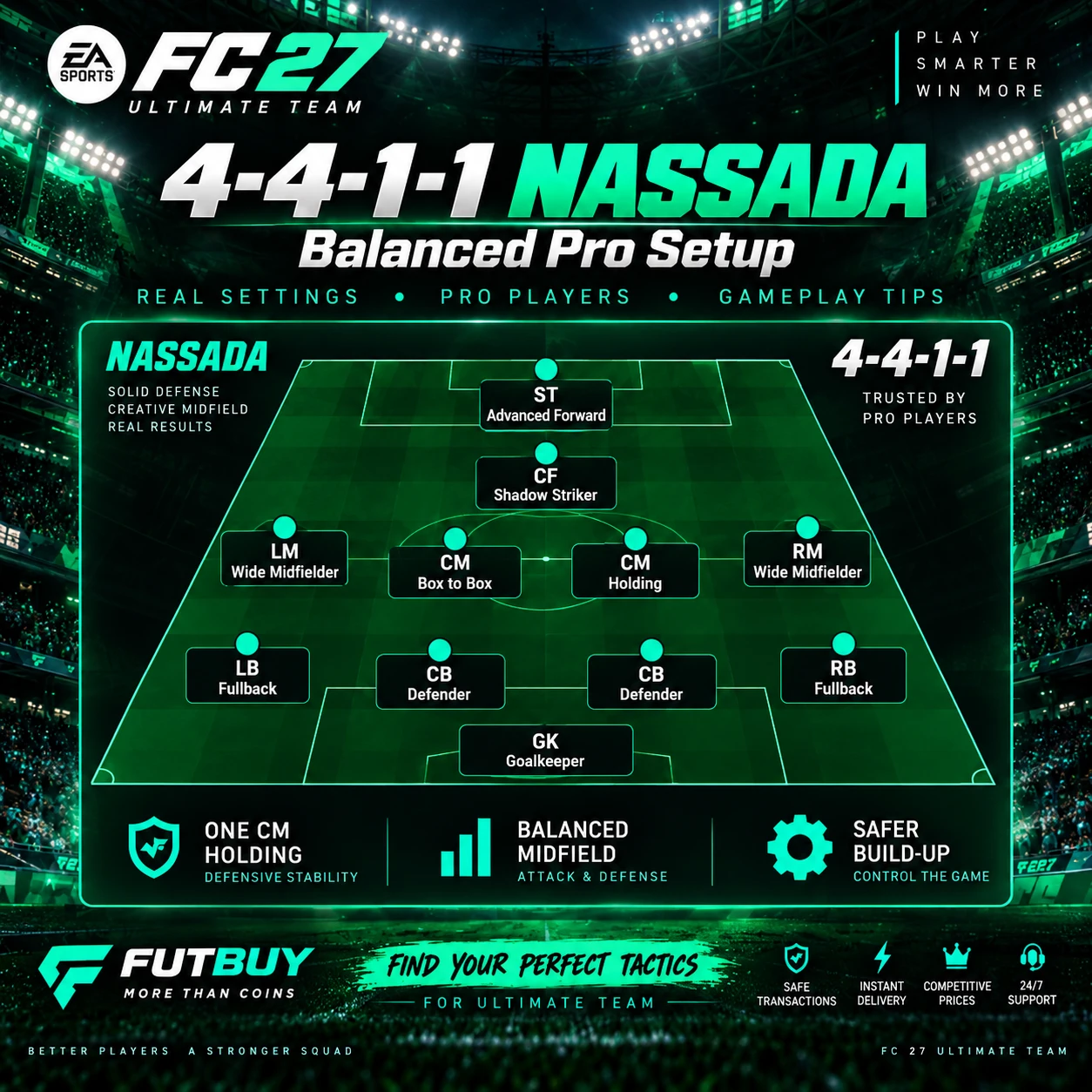
The 4-4-1-1 is one of the most balanced formations in FC 27.
Many strong players are currently using it, including Nassada, who was one of the first players in the world to reach Elite.
The structure is very simple and reliable:
• four defenders;
• four midfielders;
• one central attacking player behind the striker;
one main striker.
This formation works well because it gives you balance in almost every area of the pitch. You have enough players in midfield, you can defend with a compact shape, and you still have options in attack.
Key Detail: One CM on Holding
The most important detail in Nassada’s setup is that one of the central midfielders stays on Holding.
This is a very useful instruction.
It helps in two main ways.
First, it gives you a safer option during positional attacks. When you are building slowly, one midfielder stays deeper and becomes a reliable passing option.
Second, it helps you after losing the ball. If you make a mistake in attack, at least one central midfielder is still in position and can slow down the opponent’s counterattack.
In FC 27, this is very important because quick transitions can be dangerous. If both central midfielders push too high, your team can become open through the middle.
Who Should Use This Formation?
The 4-4-1-1 is a good choice if you like:
• balanced football;
• controlled build-up;
• midfield stability;
• safer possession;
• structured attacks;
• less risky defending.
This formation is not the most aggressive option, but that is exactly why it works. It gives you control and reduces unnecessary risk.
Possible Weakness
The main weakness of the 4-4-1-1 is that the striker can sometimes feel isolated.
Because you only have one main striker, you need your central attacking player to support attacks properly. If your CAM does not move well, you may struggle to create chances against compact defenses.
That is why the player behind the striker is very important in this formation.
Verdict on Nassada’s 4-4-1-1
Nassada’s 4-4-1-1 looks like one of the safest and most reliable formations at the start of FC 27.
It is balanced, easy to understand, and strong for players who want control. The Holding CM is the key detail that makes the tactic more stable during both attack and defense.
4-4-2 by GuiBarros
Why 4-4-2 Still Works
The 4-4-2 is a classic Ultimate Team formation.
It is simple, direct and effective. In FC 27, many strong players are still using it, including GuiBarros, one of the strongest players from South America.
The biggest advantage of the 4-4-2 is that you always have two strikers up front.
This gives you more attacking options than the 4-4-1-1. Your two forwards can combine with each other, attack space, play quick passes and put constant pressure on the opponent’s center-backs.
GuiBarros’ Tactical Idea
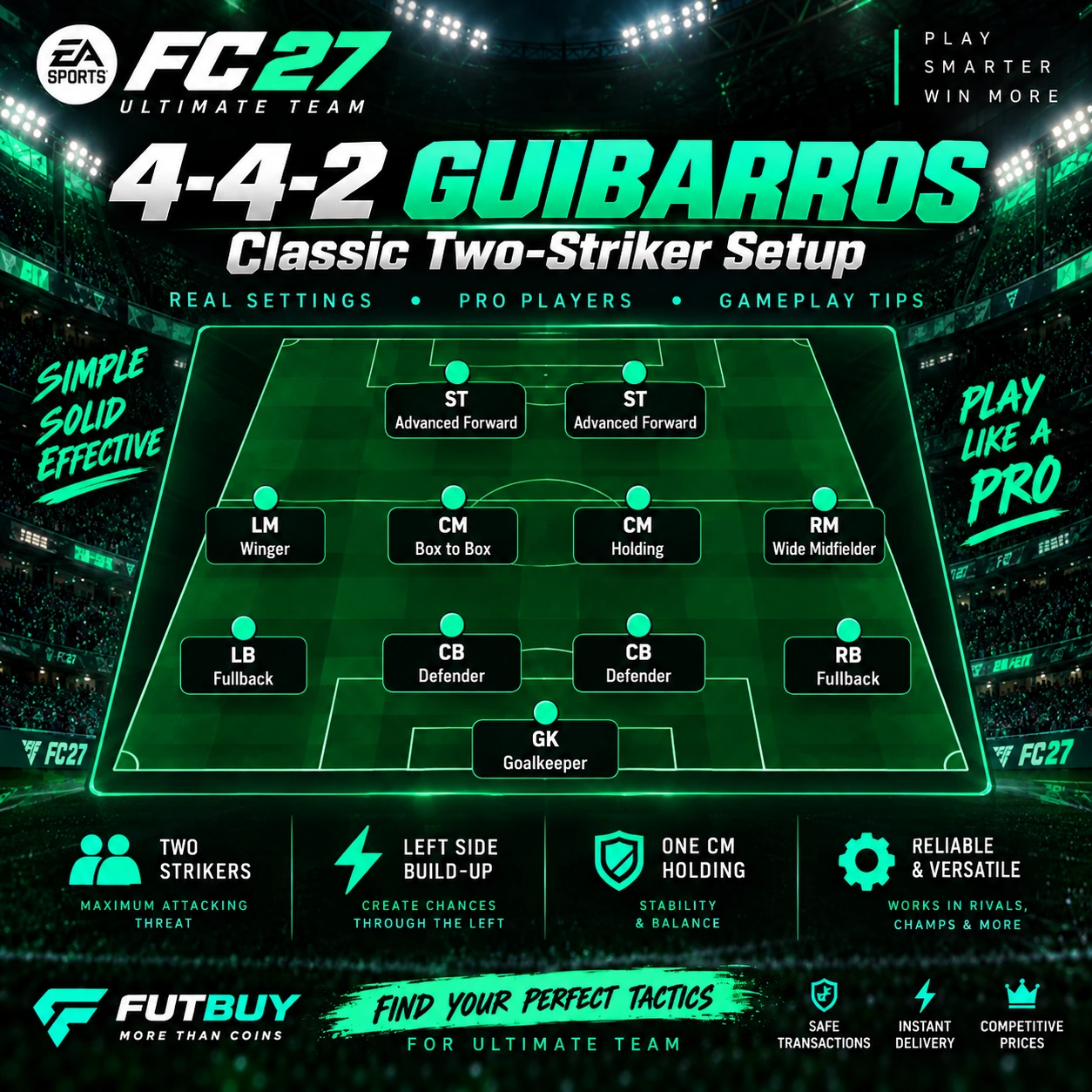
GuiBarros’ version of the 4-4-2 looks especially interesting because it seems to be built around the left side.
In his setup:
• the left midfielder plays as a Winger;
• one central midfielder stays on Holding.
This creates a useful structure on the left side of the pitch. The left midfielder can stay wider and help with positional play, while the Holding CM gives balance behind the attack.
This setup can help you build attacks more calmly instead of rushing forward every time.
Why This Setup Is Interesting
Many players think of the 4-4-2 as a direct formation: two strikers, quick passes, fast attacks.
But GuiBarros’ setup shows that 4-4-2 can also be used for more controlled football.
With one midfielder staying deeper and one side prepared for positional play, the formation becomes more flexible.
You can:
• build through the left side;
• use two strikers for quick combinations;
• switch the ball to the opposite side;
• keep one midfielder behind the ball;
• create more passing triangles.
This makes the tactic more stable than a basic attacking 4-4-2.
Could This Idea Work Better in 4-4-1-1?
This left-side positional idea could also work very well in a 4-4-1-1.
In a 4-4-1-1, the player behind the striker can connect the midfield and attack even better. That could make the left-side structure even more natural.
However, if GuiBarros uses this idea in 4-4-2, it clearly fits his playstyle.
This is an important point: you do not always need to copy a pro player’s tactic exactly. Sometimes it is better to understand the idea and then adjust it to your own game.
Who Should Use This Formation?
The 4-4-2 is a good choice if you like:
playing with two strikers;
simple attacking structure;
quick passing combinations;
balanced defending;
wide midfield support;
strong pressure on center-backs.
This formation is especially useful if you feel that one striker is not enough in attack.
Possible Weakness
The main weakness of the 4-4-2 is the midfield.
If your two central midfielders are not positioned correctly, your opponent can find space between the lines. This can make the formation feel open, especially against players who are good at quick passing.
That is why having one CM on Holding is very important.
Without that instruction, the 4-4-2 can become too risky.
Verdict on GuiBarros’ 4-4-2
GuiBarros’ 4-4-2 is a strong option for players who want two strikers but still want balance.
It is a classic formation with an interesting positional idea on the left side. If you like simple structure, quick attacks and strong striker combinations, this tactic is definitely worth testing.
4-2-1-3 by Obrun
Why Obrun’s 4-2-1-3 Is Interesting
The 4-2-1-3 by Obrun is probably the most unusual formation in this selection.
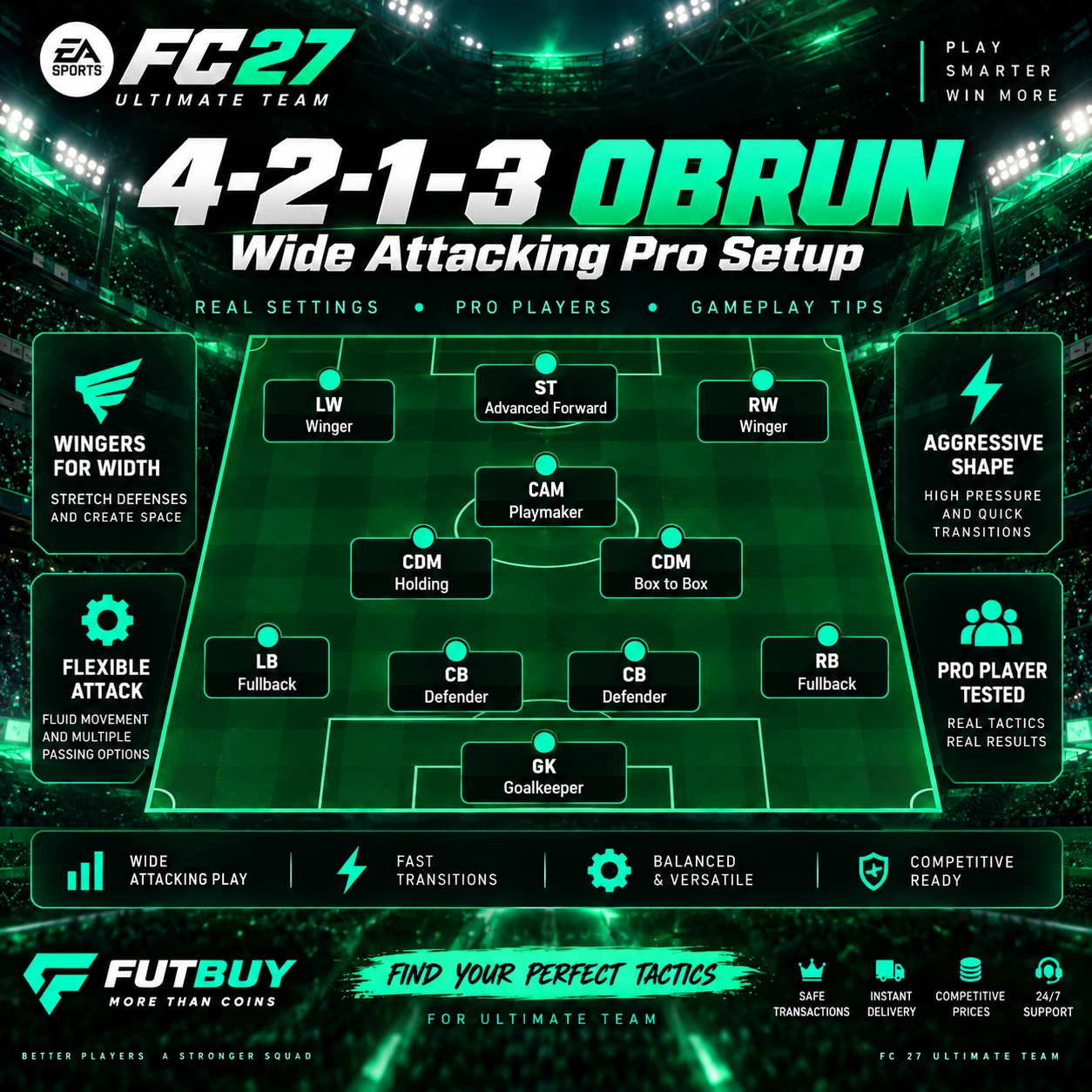
At first, the formation looks like an aggressive attacking setup. You have three players in attack, one player behind them, and two deeper midfielders.
But the most interesting detail is not the formation itself. It is the role of the wide attacking players.
Key Detail: Wingers Instead of Inside Forwards
In Obrun’s setup, the left forward and right forward are used as Wingers, not Inside Forwards.
This may look surprising.
Many players would expect wide attackers in this formation to play as Inside Forwards, because inside forwards usually move closer to the box and attack the space between the fullback and the center-back.
But Obrun’s idea seems to be different.
The Winger role gives more width at the start of the attack. This helps stretch the opponent’s defensive line and creates more space in central areas.
Closer to the box, these players can still move into dangerous zones, but during the build-up they help keep the team wide.
Why This Can Work in FC 27
Width can be very important in FC 27.
If your opponent defends compactly through the middle, wide players can help you open the pitch. They force the defense to move sideways, which can create space for your CAM, striker and midfielders.
This setup can help you:
• stretch the opponent’s defense;
• create one-on-one situations on the wing;
• open passing lanes into the middle;
• attack the space between fullback and center-back;
• build attacks with more width.
That is why Obrun’s 4-2-1-3 is interesting. It gives you attacking width without completely abandoning central options.
When Should You Change Wingers to Inside Forwards?
If you test this formation and feel that your wide players stay too wide, you can change one or both of them to Inside Forward.
This will make the formation more direct and more dangerous near the box.
It may also suit players who prefer their wide attackers to cut inside and finish chances.
According to the original observations, Obrun sometimes changed one of the wingers to Inside Forward during matches. So this setup is not fixed. It can be adjusted depending on the situation.
Is This Formation Risky?
Yes, the 4-2-1-3 can be riskier than 4-4-1-1 or 4-4-2.
Because you have several attacking players high up the pitch, you may leave space behind your wide players. If your fullbacks and midfielders are not positioned well, your opponent can counterattack quickly.
This formation requires more manual control and better defensive awareness.
You need to understand when to press, when to cover space, and when to manually move your defenders.
Who Should Use This Formation?
The 4-2-1-3 is a good choice if you like:
• attacking football;
• wide build-up play;
• aggressive formations;
• flexible winger roles;
• fast switches of play;
• creating pressure around the box.
This is not the easiest formation to use, but it can be very dangerous if you understand how to control space.
Player selection is also important in a system like this. Quick and versatile attackers can make the wide roles much more effective, especially when switching between Winger and Inside Forward. If you're looking for early high-end options for these setups, check our FC 27 Destined for Glory Team 1 review.
Verdict on Obrun’s 4-2-1-3
Obrun’s 4-2-1-3 is a very interesting and aggressive setup.
The main idea is using Wingers instead of Inside Forwards to create width in the early phase of attack. If that feels uncomfortable, you can switch one or both wide players to Inside Forward.
The most important thing is that Obrun reached a high level with this variation, so the tactic clearly has potential.
Final Verdict

The FC 27 meta is still developing, but these three custom tactics already look very useful.
4-4-1-1 by Nassada is the most balanced and reliable option.4-4-2 by GuiBarros is a classic two-striker setup with an interesting left-side positional idea.4-2-1-3 by Obrun is the most aggressive and creative option, especially because of the Winger roles.
If you are still looking for your main formation in FC 27, I would start with 4-4-1-1 or 4-4-2. They are easier to understand and more stable.
If you want something more aggressive and unusual, then Obrun’s 4-2-1-3 is definitely worth testing.
Just remember: do not copy custom tactics blindly. Use them as a base, test them in matches, and then adjust them to your own playstyle.
FC 27 is still new, the meta is still changing, and custom tactics will probably continue to evolve over the next few weeks.
Need FC 27 Coins for Your Ultimate Team?

EA FC 27 is here, and the new Ultimate Team cycle has officially started.
The first days of the Web App and early access are always important: players are completing starter SBCs, farming Objectives, testing cheap meta cards and trying to build their first competitive squad as fast as possible.
If you want to strengthen your team early, coins can make a big difference. They help you buy key starter players, complete important SBCs, invest in useful cards and react faster to the market.
If you want to upgrade your squad and get a stronger start in Ultimate Team, you can check the latest FC 27 Coins prices on FUTBUY and build your club faster from day one.
Frequently Asked Questions About FC 27 Destined for Glory
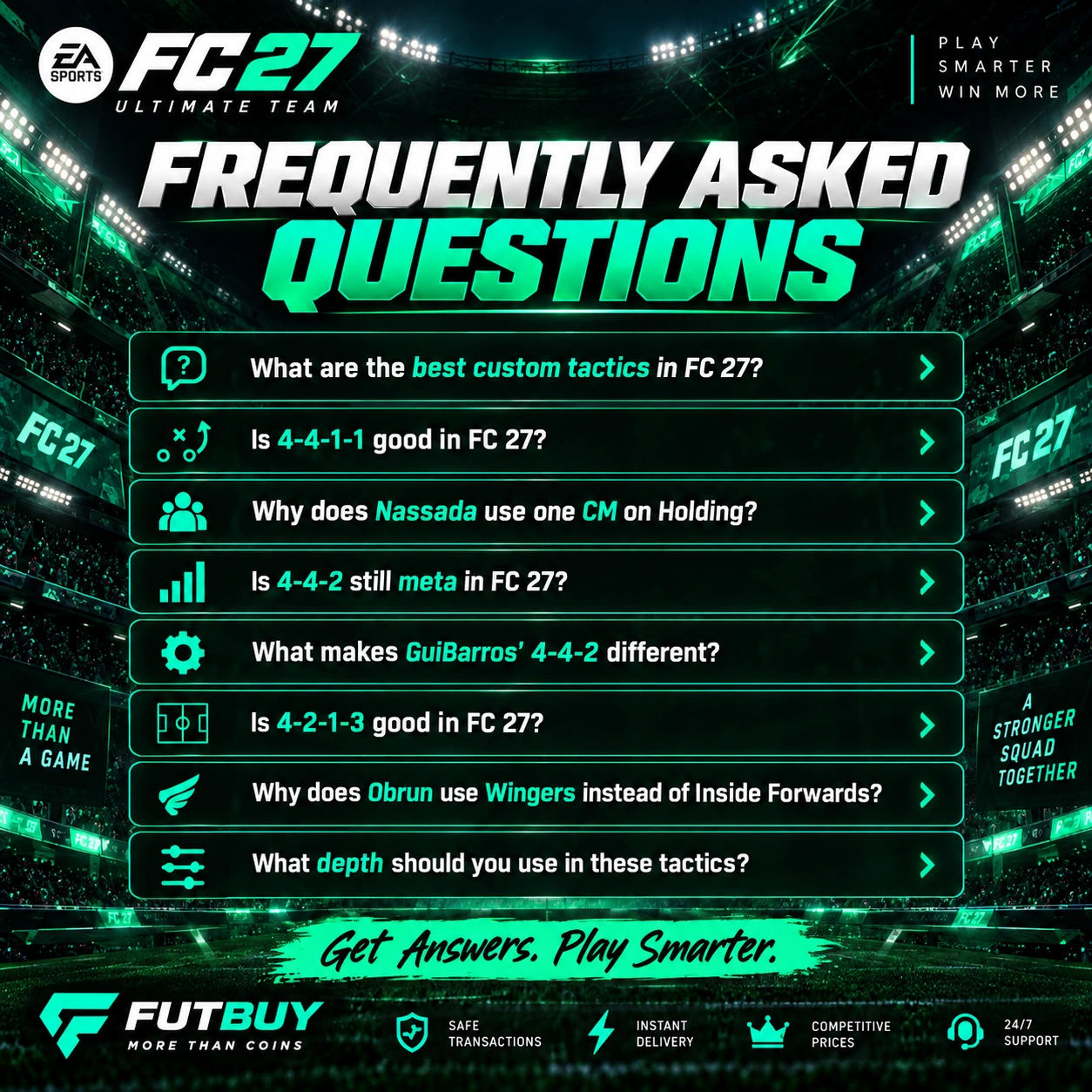
What are the best custom tactics in FC 27?
Some of the most interesting early FC 27 custom tactics are Nassada’s 4-4-1-1, GuiBarros’ 4-4-2 and Obrun’s 4-2-1-3.
Is 4-4-1-1 good in FC 27?
Yes, 4-4-1-1 is one of the most balanced formations in FC 27. It gives strong midfield control, good defensive structure and safer build-up play.
Why does Nassada use one CM on Holding?
Nassada uses one CM on Holding to keep better midfield balance, create a safer passing option in attack and reduce the risk of counterattacks after losing the ball.
Is 4-4-2 still meta in FC 27?
4-4-2 is still a strong formation in FC 27 because it gives two strikers, simple attacking structure and good pressure on center-backs.
What makes GuiBarros’ 4-4-2 different?
GuiBarros’ 4-4-2 uses a left-sided positional idea, with the left midfielder as a Winger and one central midfielder on Holding.
Is 4-2-1-3 good in FC 27?
4-2-1-3 can be very effective if you like aggressive attacking football, width in build-up and flexible winger roles.
Why does Obrun use Wingers instead of Inside Forwards?
Obrun uses Wingers to create more width during build-up play. This stretches the opponent’s defense and opens more central space.
What depth should you use in these FC 27 tactics?
In this setup, “high depth” means 61 depth, not 70 or higher. It gives pressure without making the defensive line too risky.